NASA Acres Supports STELLA Workshop at American University
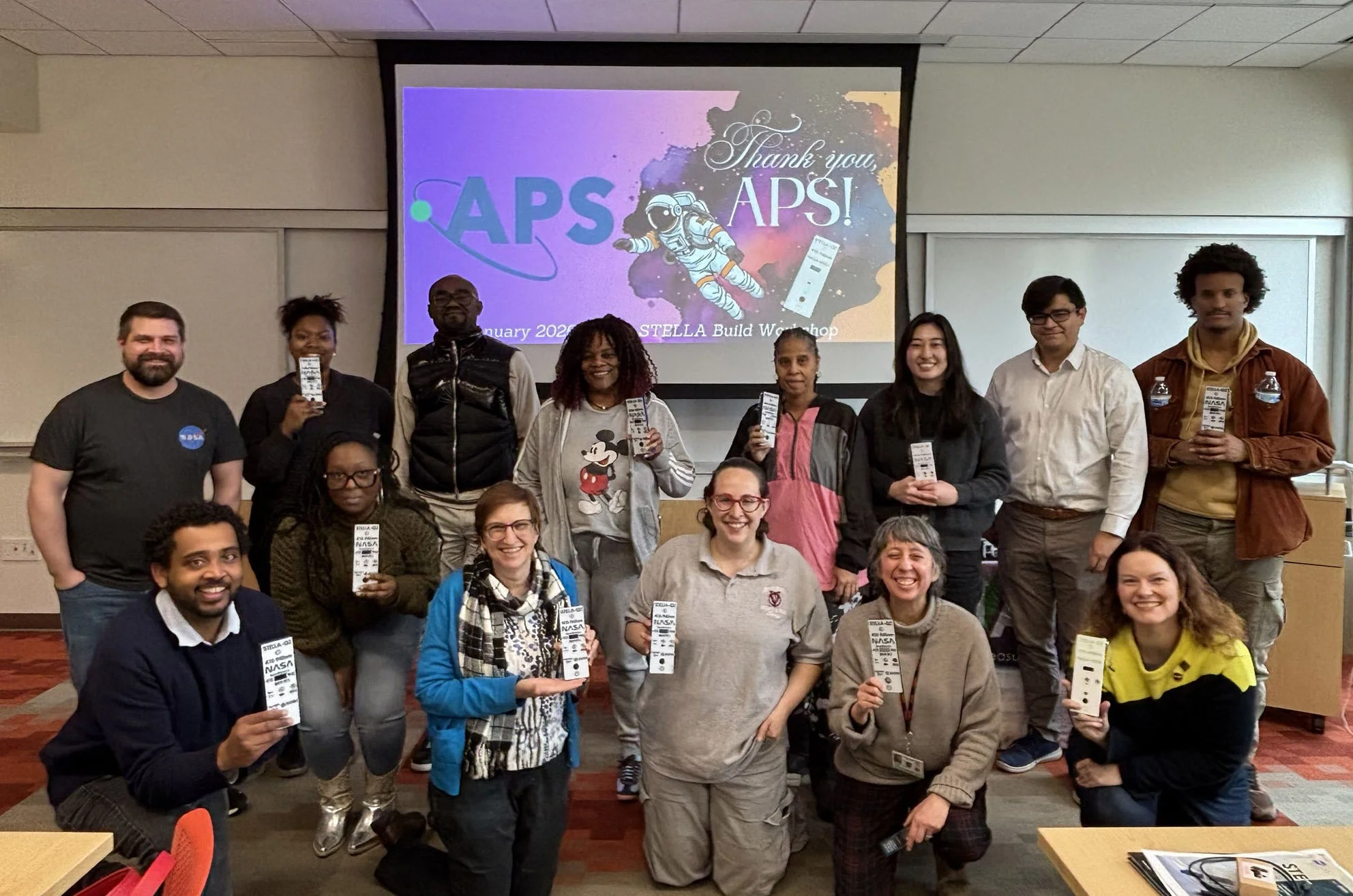
Last month, NASA's Science and Technology Education for Land/Life Assessment (STELLA) initiative organized a hands-on workshop for middle and high school teachers at American University focused on advancing remote sensing skills and STEM workforce development. STELLA is a low-cost, open-source, handheld spectrometer platform that participants build and use to measure light reflectance and environmental parameters, helping connect field-based observations with NASA satellite remote sensing.
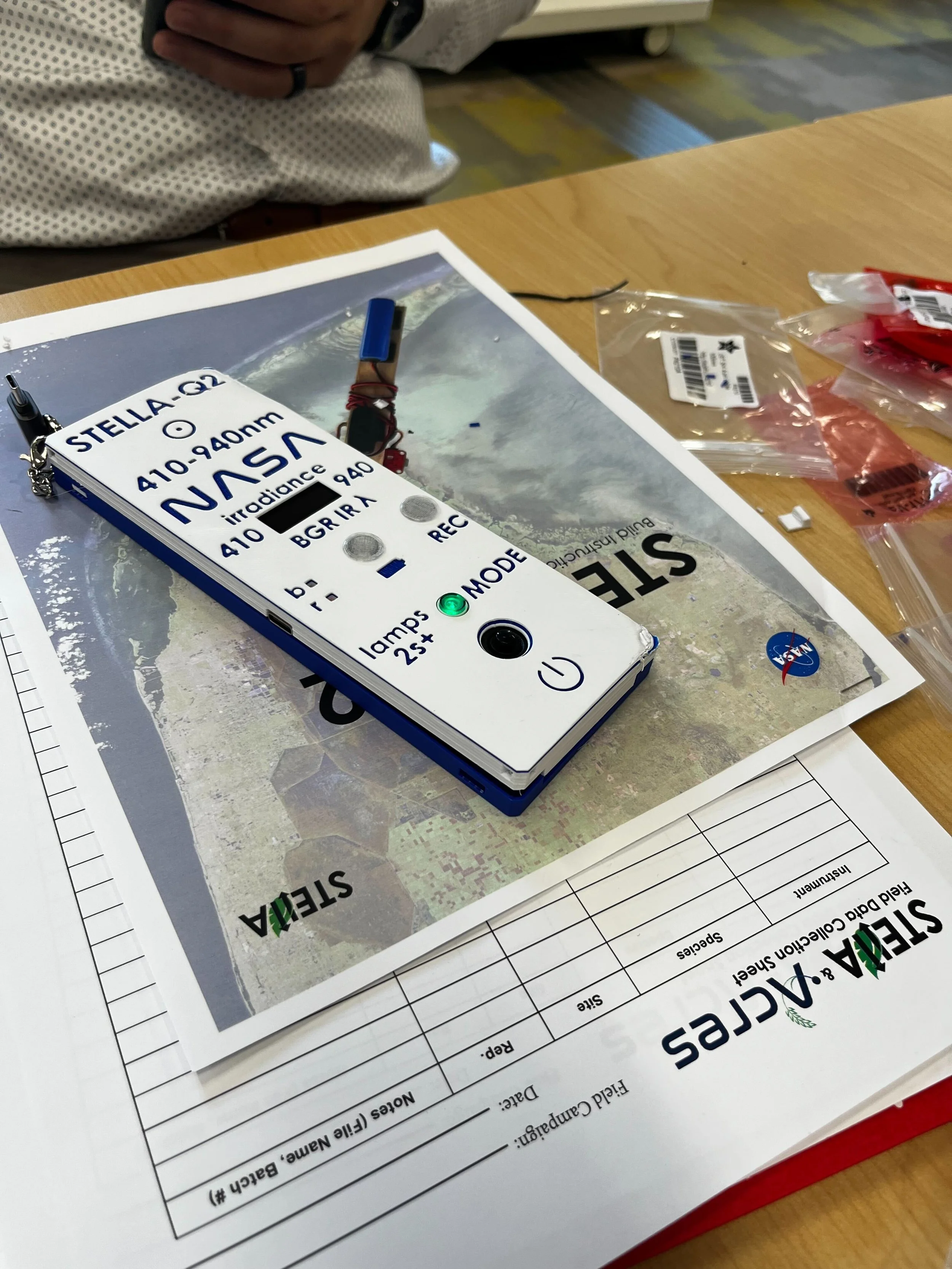
STELLA-Q2 spectrometer
STELLA Team Lead Mike Taylor led the workshop, with NASA Acres’ Drs. Mike Humber and Allison Bredder serving as contributors alongside Paul Mirel, creator and lead engineer of STELLA, who delivered a talk and Q&A, and Natalia Quinteros Casaverde, who shared a presentation on her use of STELLA to support home garden monitoring in Jamaica. The workshop was organized and planned by Chelsey Brown, Program Manager for the NASA District of Columbia Space Grant Consortium and the Integrated Space Science and Technology Institute (ISSTI). Funding was provided by a grant Chelsey received from the American Physical Society. It included contributions from Rachel Stagner, a nationally recognized STEM educator, 2023 PAEMST Awardee, 2018–19 Albert Einstein Distinguished Educator Fellow at NASA, and founder of STEMTeachersDMV, which also organized and sponsored the workshop.
During the workshop, teachers progressed from understanding how sunlight interacts with Earth’s surfaces to applying Landsat imagery, measuring spectral reflectance with STELLA-Q2 spectrometers, and analyzing vegetation health using NDVI, gaining skills they will now bring directly to their classrooms and students. The presenters highlighted techniques that support agricultural applications, demonstrating how NASA satellite data and field spectroscopy inform crop monitoring, resource management, and decision-making. Teachers assembled and programmed their own instruments, collected and analyzed field data, and gained practical experience aligned with real NASA mission applications. Participants left the event with functioning instruments, hands-on remote sensing experience, and positive feedback highlighting the value of the workshop’s practical, real-world focus.
Through initiatives like this, NASA Acres advances workforce development by equipping educators and students with applied remote sensing skills and helping bridge the gap between NASA Earth observation data and on-the-ground agricultural and environmental applications.