
NASA Acres Chief Scientist Kaiyu Guan Named 2026 MacArthur Fellow
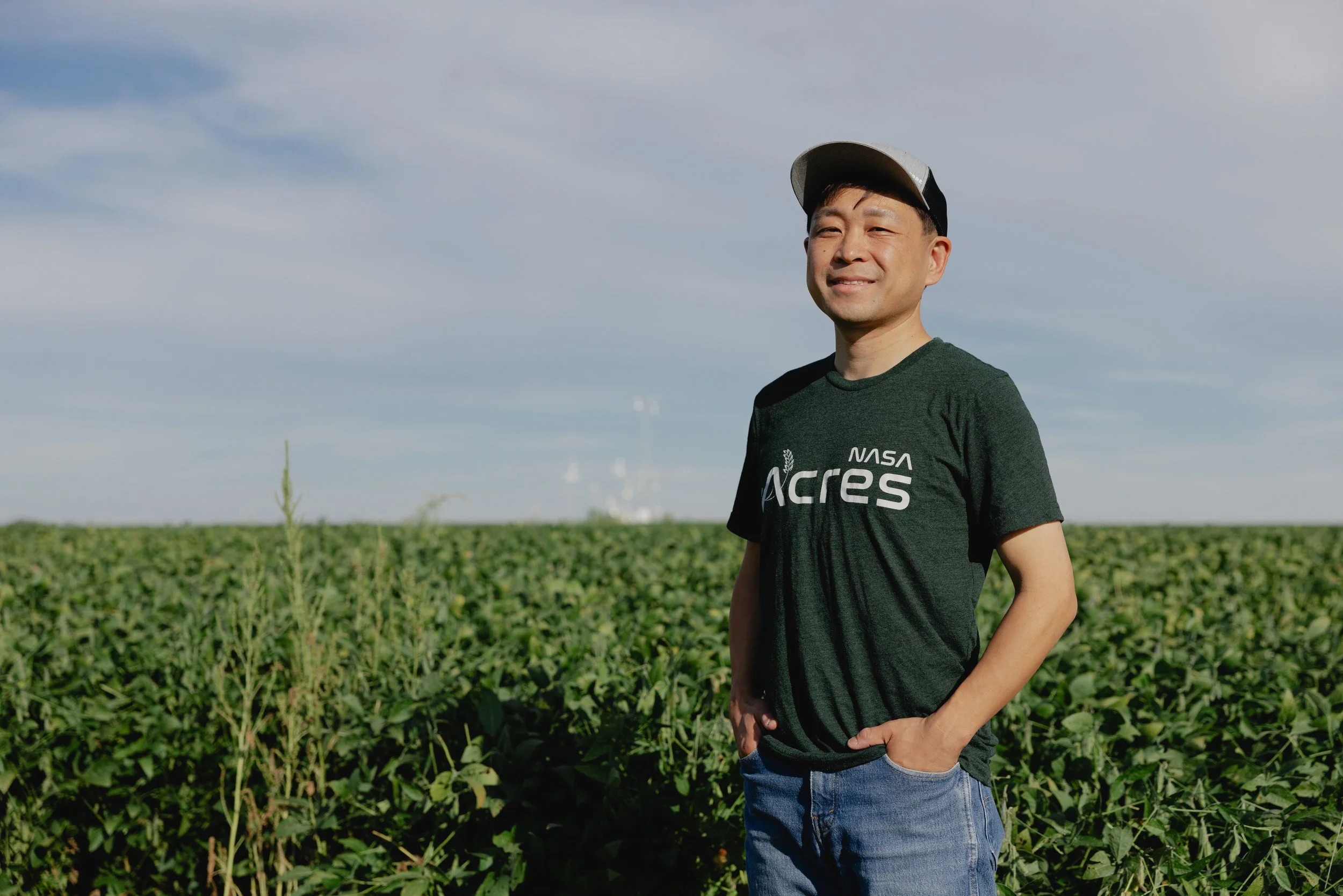
© John D. and Catherine T. MacArthur Foundation—used with permission.
NASA Acres Chief Scientist Dr. Kaiyu Guan of the University of Illinois Urbana-Champaign has been named a 2026 MacArthur Fellow, one of the nation’s most distinguished honors recognizing exceptional creativity, significant achievement, and the promise of important future advances.
The MacArthur Fellowship celebrates individuals whose accomplishments demonstrate originality and the potential to shape their fields in consequential new ways. Each Fellow receives an $800,000 award over five years, providing the freedom to pursue ambitious ideas and continue advancing their contributions.
Guan was recognized for combining Earth observations, process models, and machine learning to understand and predict interactions among crops, environmental conditions, and agricultural practices. His research connects observable factors—including crop conditions, climate, water, and nutrient resources—with the biological and physical processes that govern agricultural ecosystems, strengthening the ability to monitor, predict, and optimize crop yields, environmental benefits, and resource use.
Among his major contributions is STAIR, a fully automated data-fusion method that draws on multiple sources of satellite remote-sensing data to generate detailed daily land-surface imagery and spectral information down to the subfield level. He has also advanced cross-scale sensing approaches that link field, airborne, and satellite observations to map resources and processes from individual fields to large regions, including crop nitrogen levels and photosynthetic activity.
More recently, Guan and his colleagues developed a knowledge-guided machine learning (KGML) framework for more precise measurement and prediction of agricultural systems. By combining observational data with knowledge from process models, the approach has enabled field-level predictions of carbon fluxes, crop yields, and soil carbon stocks, as well as applications related to greenhouse gas emissions and soil carbon storage.
Building on these advances, he developed a “system-of-systems” framework for predictive agricultural science that brings together KGML and other artificial intelligence capabilities, observational data, and process models describing environmental variables, management practices, and crop conditions. These capabilities can estimate conditions that cannot be directly observed, forecast outcomes, and test responses to changes in weather or management, providing farmers and policymakers with better information to support crop production and reduce environmental impacts.
At NASA Acres, Guan’s broader research program brings together advanced process models, satellite sensing, fieldwork, artificial intelligence, and supercomputing to examine how climate and human practices affect crop productivity, water resources, ecosystem functioning, and environmental sustainability. His group applies those capabilities to challenges including large-scale crop monitoring and forecasting, greenhouse gas quantification, water management and sustainability, agricultural policy design, and global food security.
That research seeks to bring domain knowledge, satellite data, supercomputing, and machine learning together to improve the ability to observe crop fields in real time; monitor crop growth, water demands, and nutrient needs; forecast yields, risks, and environmental impacts; and provide farmers and policymakers with better information for field management and agricultural policy.
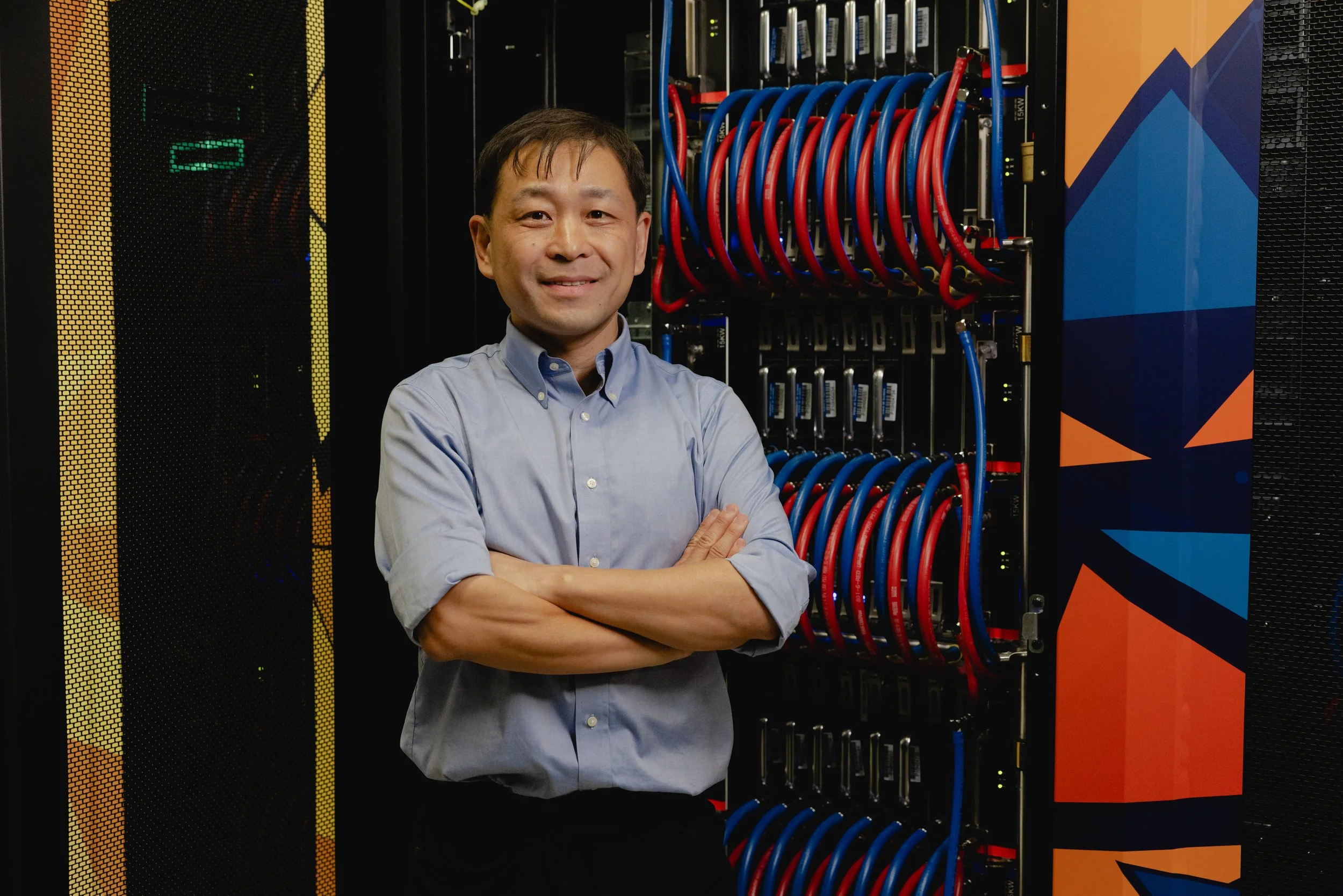
© John D. and Catherine T. MacArthur Foundation—used with permission.
Guan is the Levenick Endowed Professor in agroecosystem sensing and modeling at the University of Illinois Urbana-Champaign, a Blue Waters Professor in Supercomputing, a University Scholar of the University of Illinois System, and founding director of the Agroecosystem Sustainability Center. He serves as Chief Scientist of NASA Acres.
Guan’s grandfather gave him the name Kaiyu (开宇) with the hope that he might one day become an astronaut and “explore and discover the universe.” That aspiration has been reflected throughout Guan’s career, including in his partnership with NASA and his use of satellite observations, modeling, and advanced computing to study Earth’s agricultural systems.
Learn more about Dr. Guan and his selection as a 2026 MacArthur Fellow:
https://www.macfound.org/fellows/class-of-2026/kaiyu-guan