Critical Environmental Data Studies Workshop: Data, Technology, and the Future of Agrifood and Environmental Systems
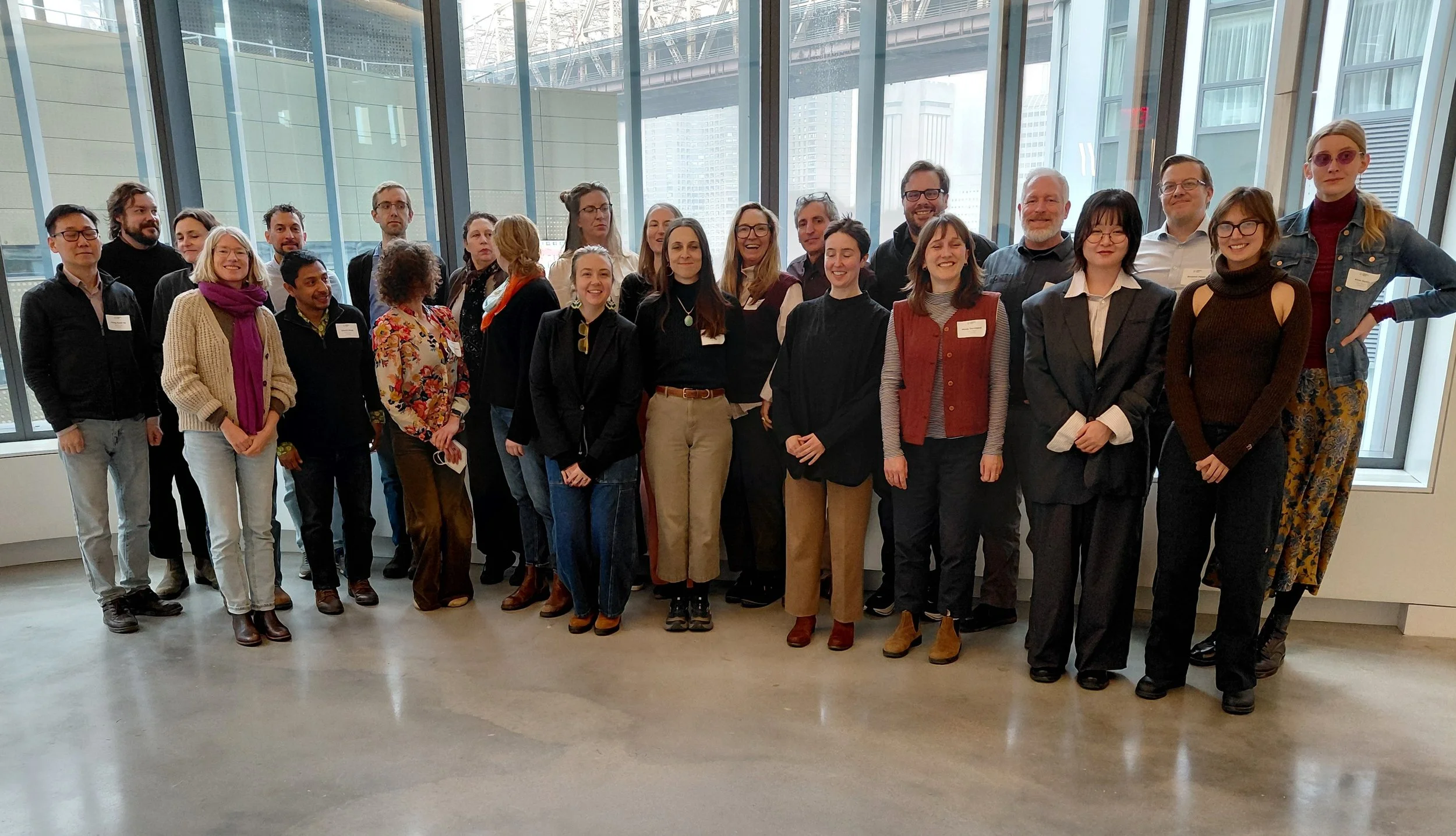
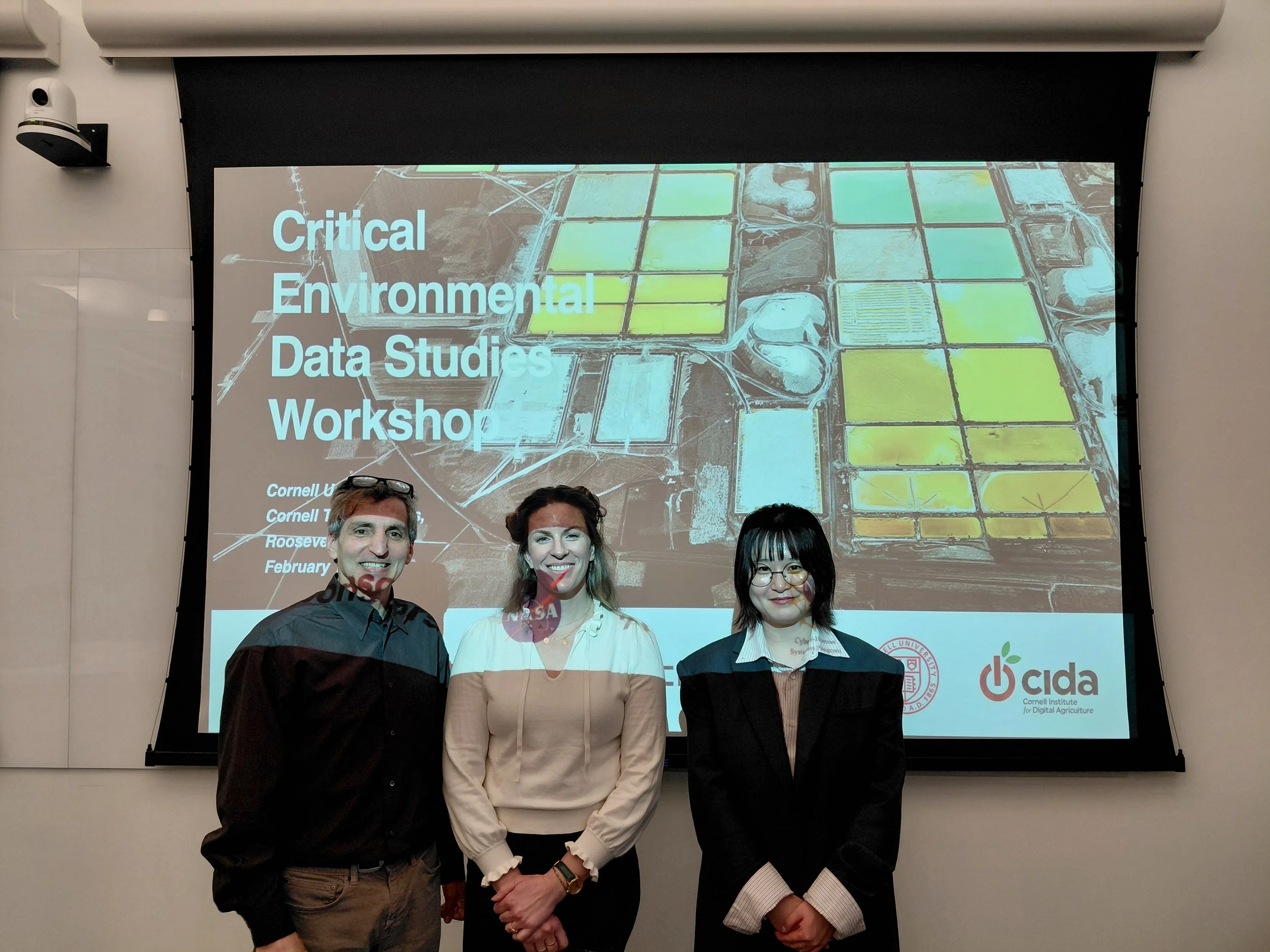
How is data reshaping the future of agriculture and environmental governance—and who benefits from these changes? These were central questions at the Cornell CEDS Workshop, supported by NASA Acres and held last month at Cornell Tech in New York City. The workshop brought together a diverse, interdisciplinary group of researchers—including NASA Acres Executive Director Dr. Alyssa Whitcraft—to examine how data-driven technologies are transforming agrifood systems, conservation, and sustainability transitions.
Scholars from fields including critical data studies, environmental science, political ecology, agrifood systems, and information science, came together to create a space for dialogue across disciplines that do not often intersect but share common questions about the role of data in society.
Discussions focused on how technologies such as Earth observation, AI, sensors, and data platforms are shaping agriculture and environmental systems. Participants examined both their potential and the broader dynamics influencing their use, including policy, investment, and embedded assumptions in data and design. The workshop also highlighted the need to better account for issues of power, inclusion, and diverse knowledge systems in data-driven innovation.
With more than half of the 22 participants representing late-stage PhD students and early career researchers, the workshop placed a strong emphasis on professional development and mentorship. This focus helped foster new connections across career stages and disciplines, creating a foundation for sustained collaboration and future research.
The program also featured research presentations, including a paper by Dr. Steven Wolf of Cornell University—who co-organized the workshop alongside Dr. Yolanda Zhang of Harvard University—which examined the sociotechnical construction of soil carbon data systems and how different data formats and measurement approaches shape emerging carbon markets and carbon governance efforts. The workshop will contribute to two forthcoming special journal issues and has already catalyzed new interdisciplinary collaborative research.
By fostering dialogue across disciplines and perspectives, the Cornell CEDS Workshop reflects NASA Acres’ commitment to advancing data-driven innovation that is not only scientifically robust, but also impartial, transparent, and responsive to the needs of agricultural communities.