Connecting Agriculture Students to NASA Earth Observation Science Through 4-H and FFA
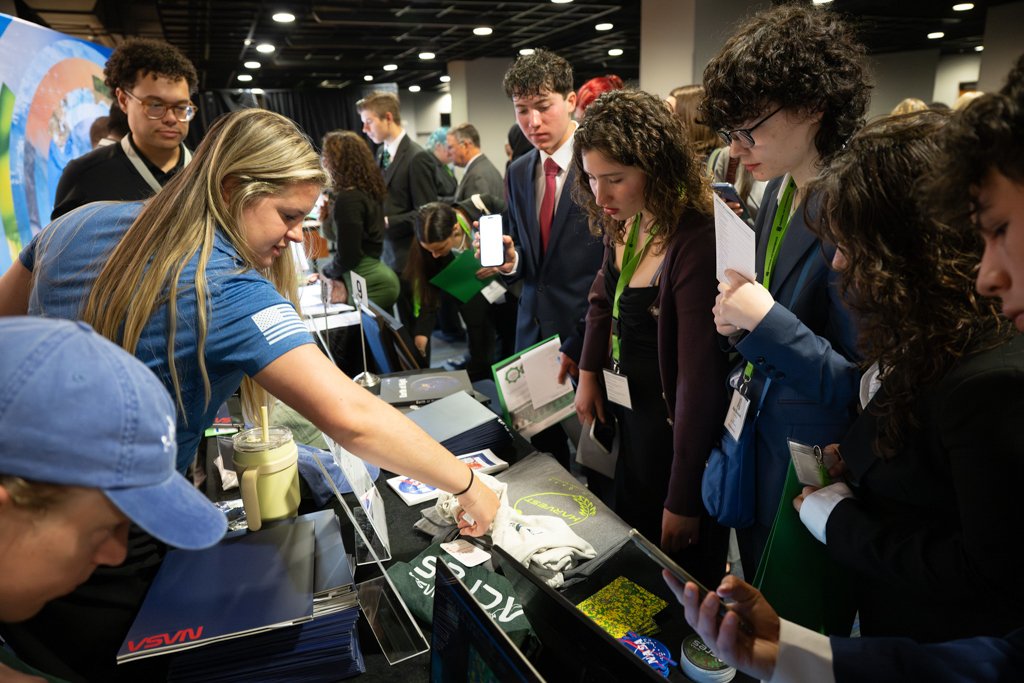
NASA Acres was proud to participate in two youth engagement events this past month: The 2026 Youth Expo at the National 4-H Conference and the 99th Arkansas FFA State Convention. Together, these events provided opportunities to connect with students and educators about how NASA Earth observations and remote sensing can support agriculture and many other industries.
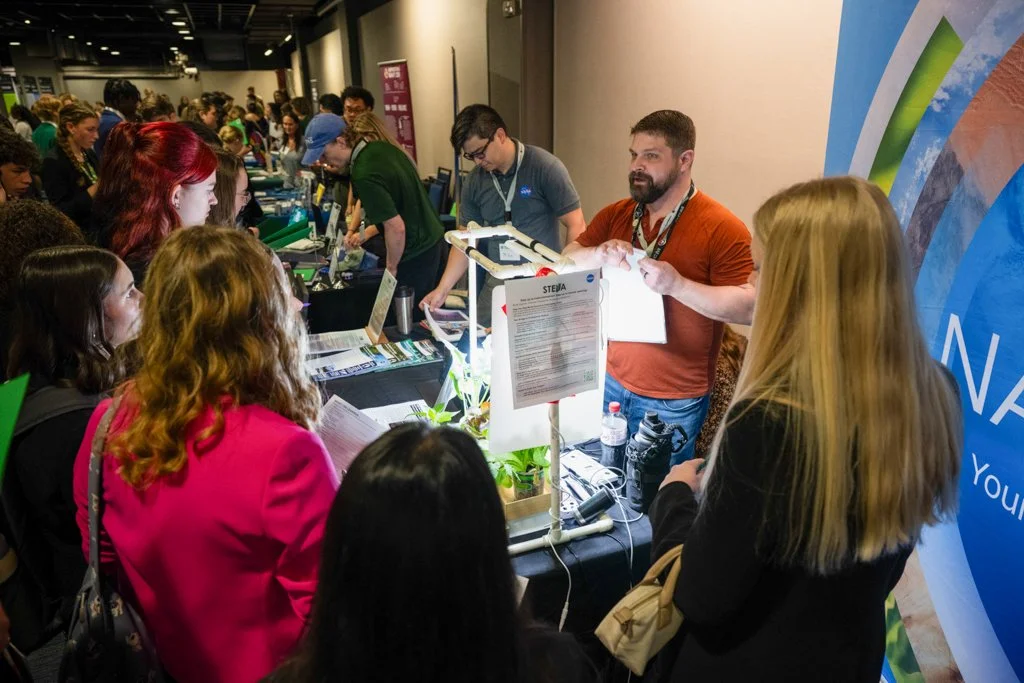
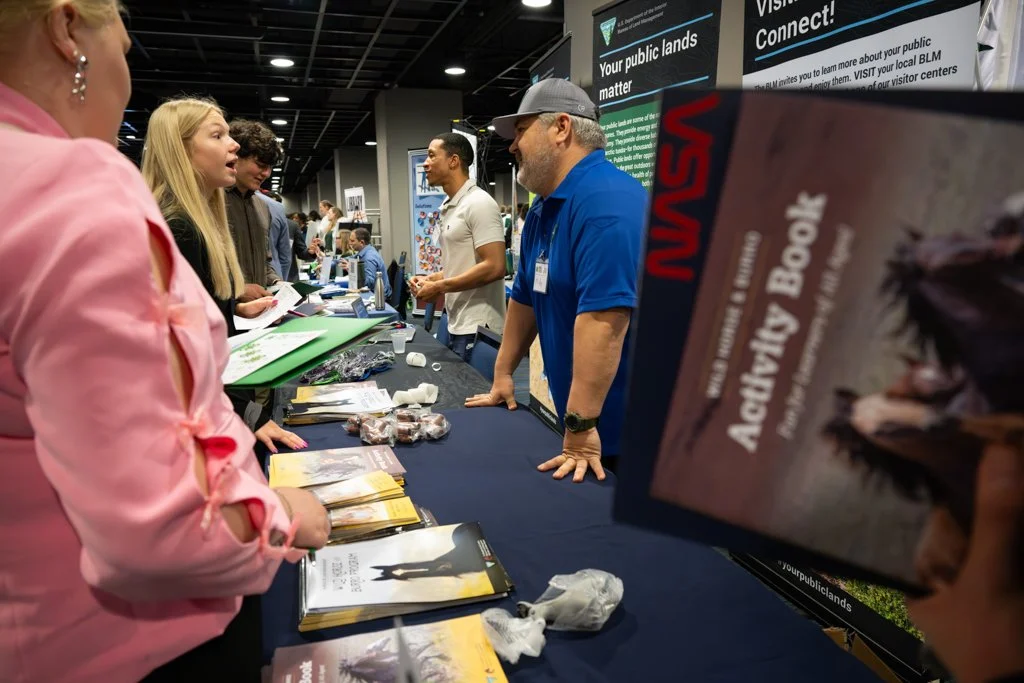
At the National 4-H Youth Expo students from across the country gathered in Washington, D.C., to explore leadership, service, and career pathways. NASA’s participation gave many of them a first look at the agency’s role in agriculture. At the career fair, representatives from NASA Acres and our sister consortium NASA Harvest, along with NASA’s STELLA, EarthRise Developers Academy, and ARSET shared how satellite data can help monitor crop conditions, track drought, and improve yield forecasts. Students were especially interested to learn that NASA satellite data is freely available and used by researchers, decision-makers, farmers, and others across the food and agriculture system. Hands-on demonstrations also helped make remote sensing more tangible, including activities showing how instruments like STELLA detect differences in how plants reflect light and how that information can reveal crop conditions over time. The event also created valuable opportunities to connect with teachers interested in bringing remote sensing resources and curriculum into their classrooms.
Read more about our participation in the National 4-H Youth Expo at NASA Harvest.
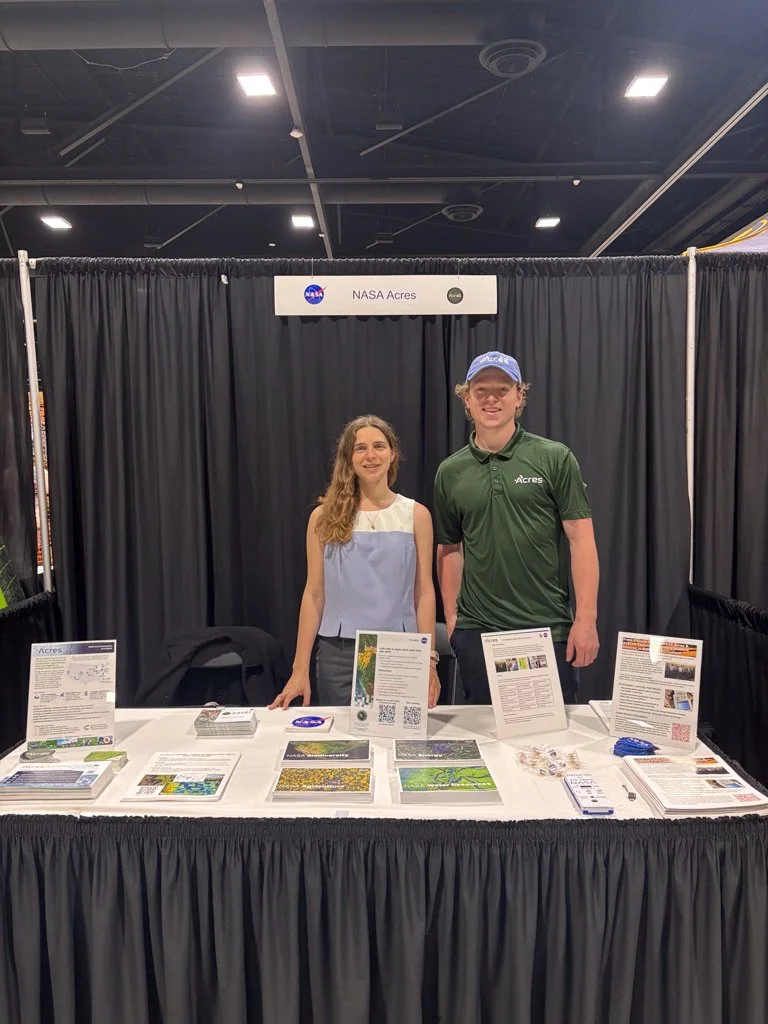
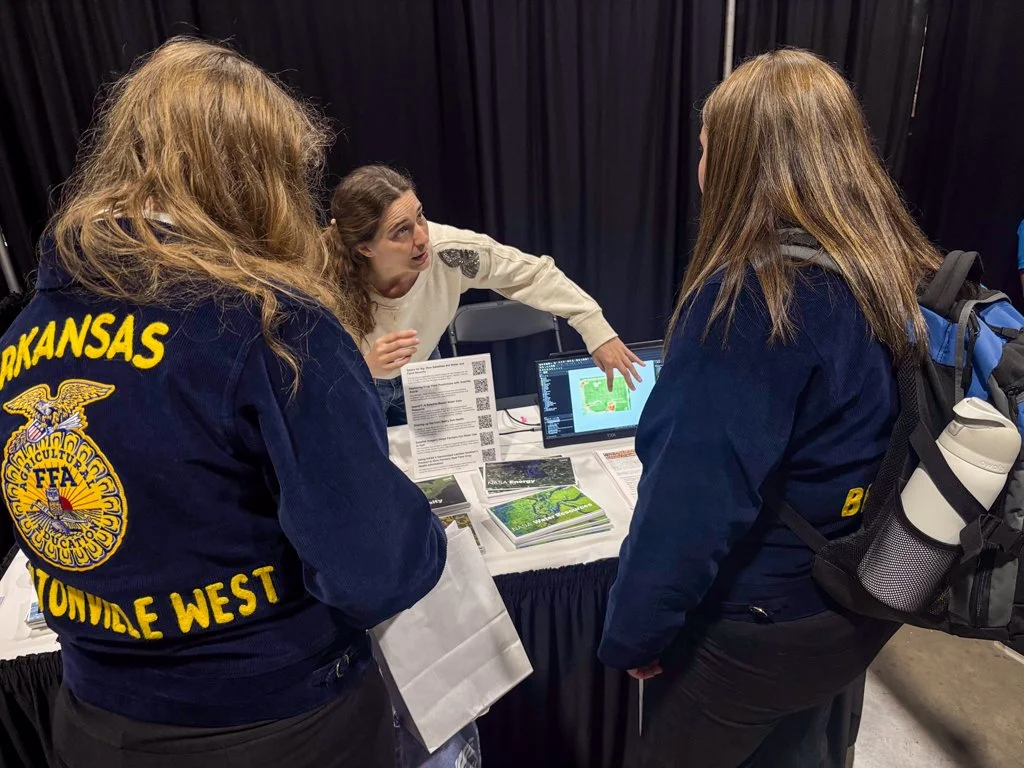
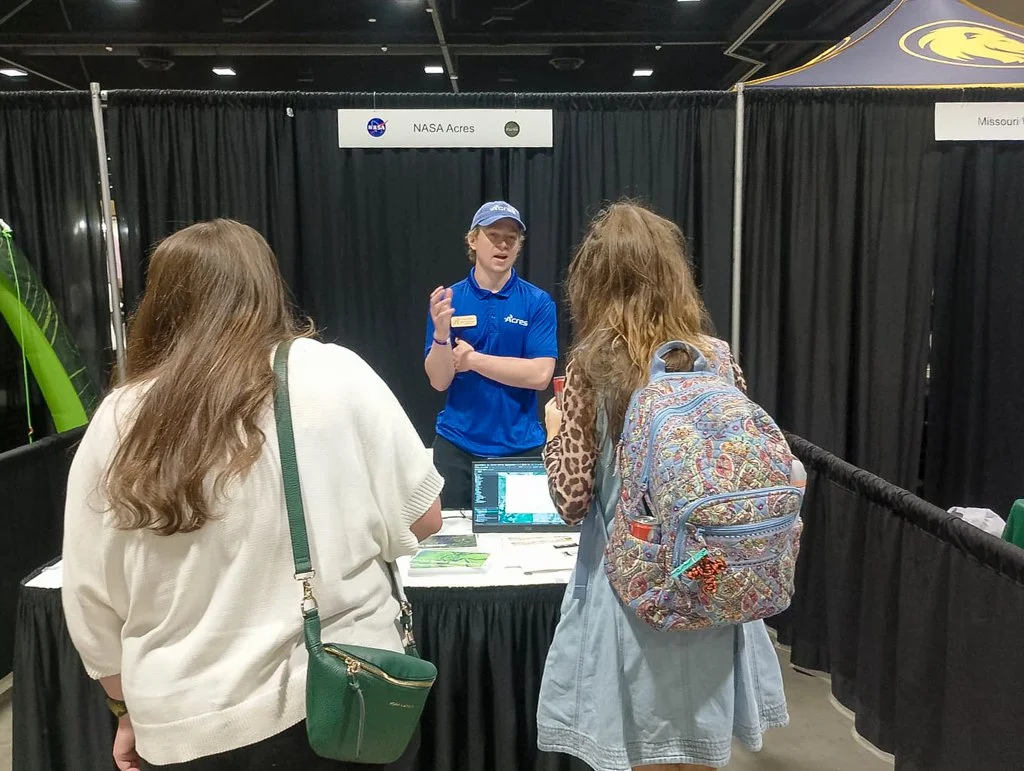
At the 99th Arkansas FFA State Convention, which drew more than 3,000 students, NASA Acres focused on making remote sensing practical and approachable. NASA Acres’ Jacob Orser and Priscila Cano from Ciampitti Lab at Purdue University fielded many questions from interested attendees. Because many students were already familiar with drone technology, conversations often centered on comparing drone imagery with satellite-based remote sensing and discussing the strengths of each. These conversations also led to promising connections with FFA teachers interested in introducing satellite data into their instruction through local examples and real-world management applications.
Both events reflected the value of engaging students early and helping educators access tools that make Earth observation relevant, understandable, and useful. NASA Acres looks forward to continuing these connections and supporting the next generation of agricultural and Earth science leaders.